Blog Feed
Free Help with Federal Tax Filing
Hello everyone! This is a bit of an unconventional post to put here, but ’tis the season to do taxes, and I figured this resource could be of some use to those of you that, like me, have really busy schedules and can’t handle the headache that comes with figuring out tax forms alone.
I just found this out this year, but it turns out that if you make less than $69,000 per year, you can access software like TurboTax, H&R Block, etc, that guides you through filling out your taxes online, for free. This service is offered through the IRS Free File program…and tax companies like those mentioned above have tried really hard to keep people from finding out about it! Last year, TurboTax caused a bit of a scandal when it tried to hide its Free File page from search engines (in an attempt to mislead people eligible for free filing into paying money for the exact same service).
I’ve actually used Free File to file my own taxes this year, and it was really helpful. Just make sure if you use it you have digital copies of the needed forms; I know some workplaces send them out, some don’t. If you don’t have digital copies, some of the tax software Free File offers allows you to take a photograph of a paper copy and then fill in the information digitally. If it sounds like it’ll make filing into even more of a headache, don’t worry about it! For me, using technology makes taxes easier. For others, it may be the opposite.
Again, a bit of an unconventional post here, but part of the beauty of humanities is learning to snoop around in all areas of life and see what’s available to help us! Plus, the MISC category exists on this website for a reason. I hope this resource proves useful to those of you that didn’t know about it already, and next time we’ll be back to your regularly scheduled academic postings.
Access Free File HERE

The Couple in the Cage
By Coco Fusco and Guillermo Gómez-Peña
“The Couple in the Cage” was a piece of performance art by Coco Fusco and Guillermo Gómez-Peña that took place from 1992-1993, 500 years after Christopher Columbus arrived in the Americas. It debuted at the Field Museum in Chicago, Illinois, and toured from city to city across the world while it was active.
During each performance, Fusco and Gómez-Peña donned the traditional clothing of the “Guatinaui” people, a tribe previously undiscovered by Western society. In the cage, they also performed traditional Guatinaui tasks such as sewing voodoo dolls, watching television, and dancing. The catch? Neither the Guatinaui people nor the island they were allegedly from existed.
The performance was supposed to be a satire of the human zoos (featuring indigenous people) created by Christopher Columbus and practiced for centuries thereafter. However, it didn’t go entirely as planned; many of the audience members actually believed the Guatinaui people were real, and readily stepped into the shoes of the white colonist examining the indigenous person as an artifact.
This video documents the entire tour, and is a piece of art in itself. It’s long, but it’s extremely powerful. Fusco and Gómez-Peña’s art is significant not only in the statement it makes against colonialism and racism, but also because it reimagines what art can be. In this piece, the audience is as much as part of the art piece as the performance artists themselves.
If you do decide to watch the video, be aware that it contains both racism and nudity; for five dollars, museum visitors were allowed to see the “male Guatinaui’s” genitals. Consider, as you watch, what medium of art this would be considered, as well as its shape, form, color, etc. Why might this performance say about gender? Sexuality?
Mary Edmonia Lewis, A.K.A. Wildfire
Mary Edmonia Lewis is known today as the first professional African-American sculptor. Though racism, false accusations of theft and poisoning, and poverty threatened to keep her out of the art world, her marble sculptures earned her worldwide renown. Few of her pieces survive today, but her portfolio is extensive; her sculptures had Greco-Roman influences, but she was known primarily for expressing her dual Native-American and African-American heritage. You can read her full biography here.
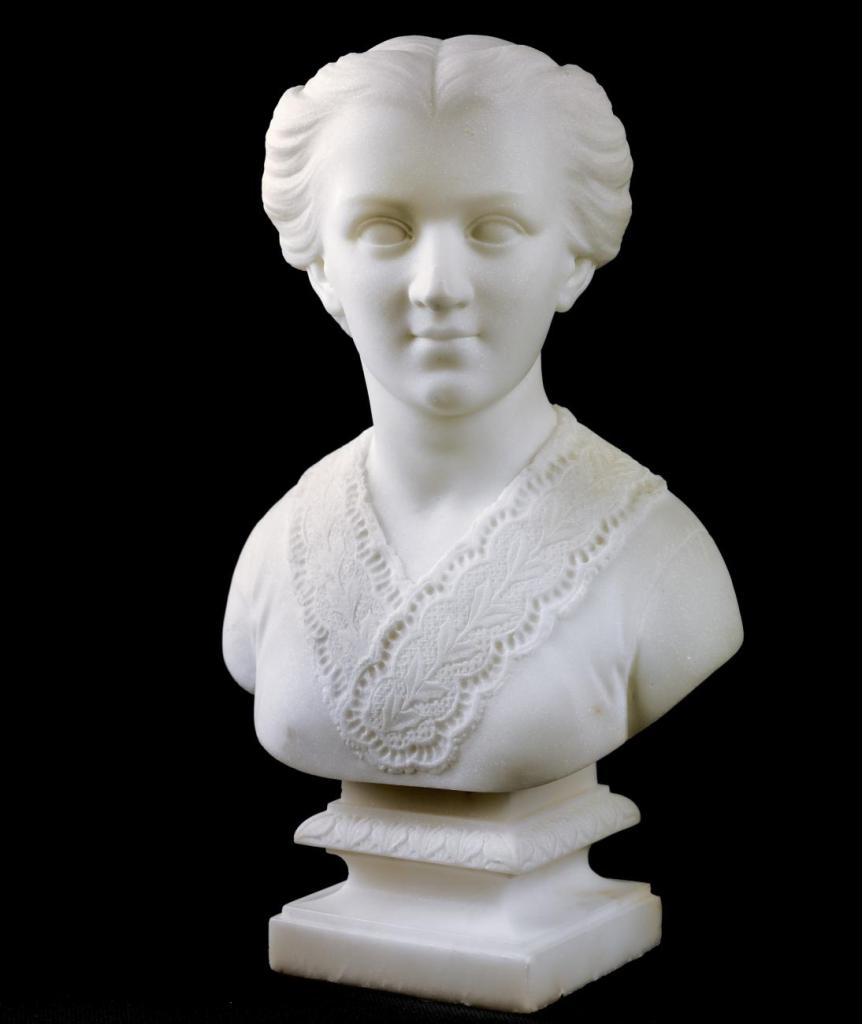
Edmonia Lewis
Anna Quincy Waterston, 1866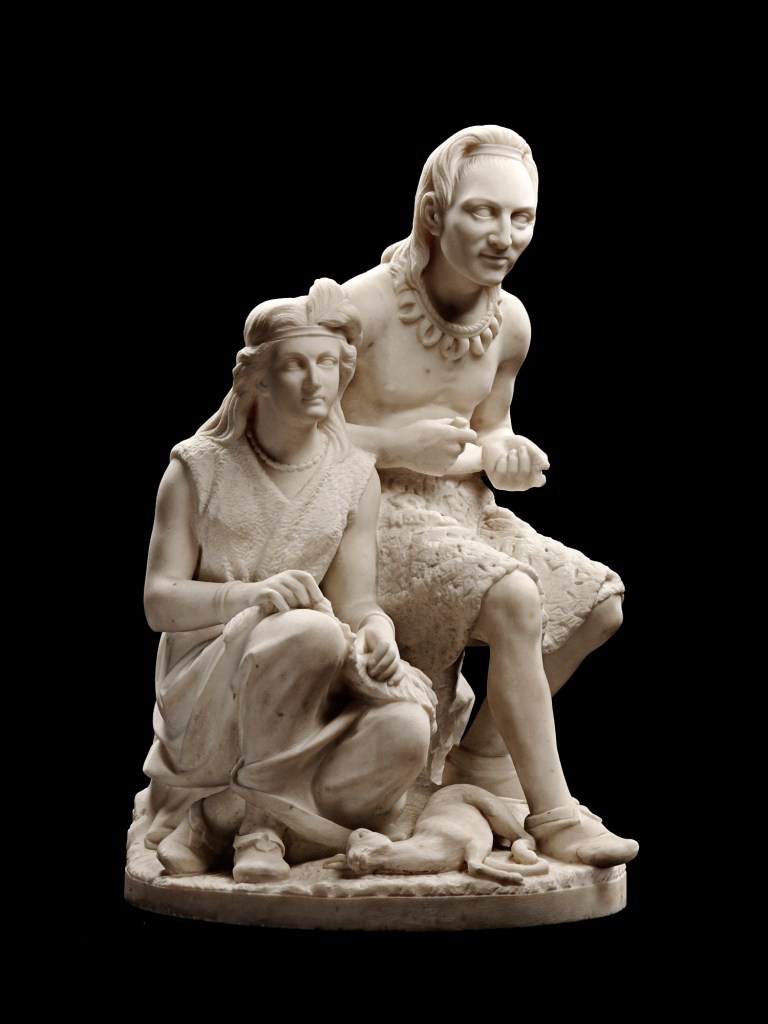
Edmonia Lewis
Old Arrow Maker, 1872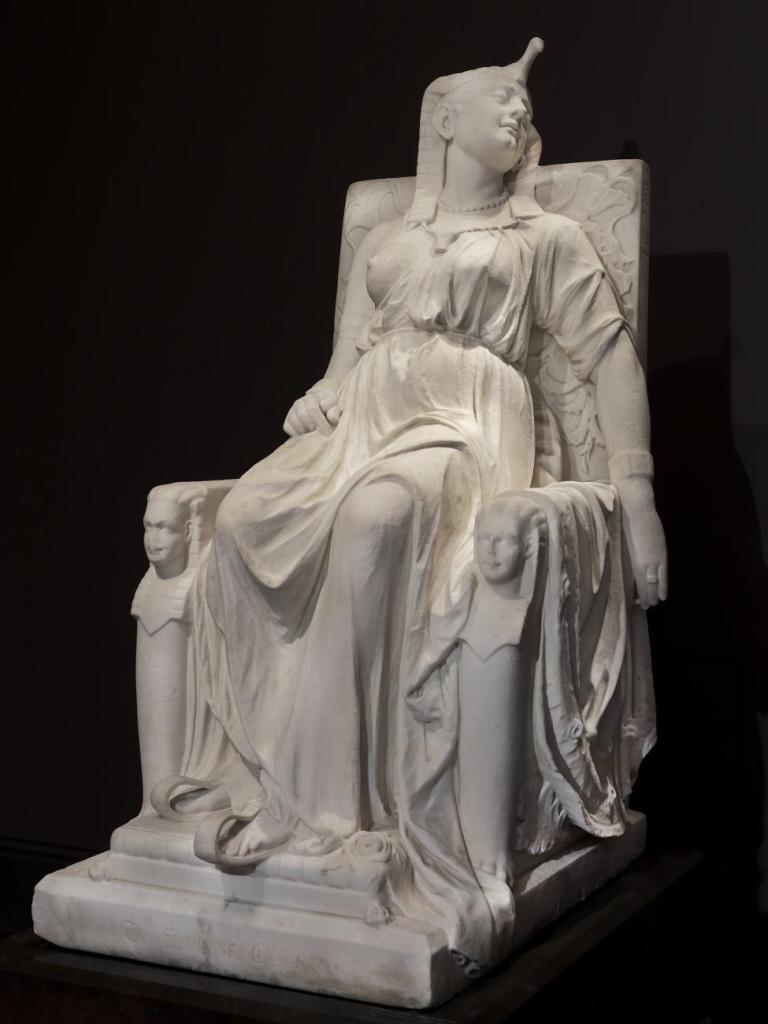
Edmonia Lewis
The Death of Cleopatra, 1876
If you’re more of a words person than a visual person, or if you just want to experience more of Edmonia Lewis’s lasting impact on art and culture, you might consider reading these poems by Tyehimba Jess. If you’re a current Odyssey student at UIUC, keep that name in mind, as you may be hearing about a relevant event soon!
The poems can be read at this link, and are titled “Alabaster Hands” and “Indian Combat.” Both are inspired by Lewis’s work.
Using SparkNotes to Read Difficult Texts
One strategy I use to read difficult texts is looking at the SparkNotes page for them before even opening the book. SparkNotes is a website that gives overviews of many classic literary texts, along with some philosophy and other subjects. By reading the SparkNotes page before the actual text, you can jump into the text with a basic understanding of what it’s about. This makes it easier to understand, which means you can dedicate your energy to picking up interesting details for class discussion or even an essay, rather than just trying to understand what the writer is saying.
If you’ve taken an Odyssey class in philosophy, you’ve probably read bits of Nichomachean Ethics by Aristotle. Let’s take a look at the SparkNotes page.
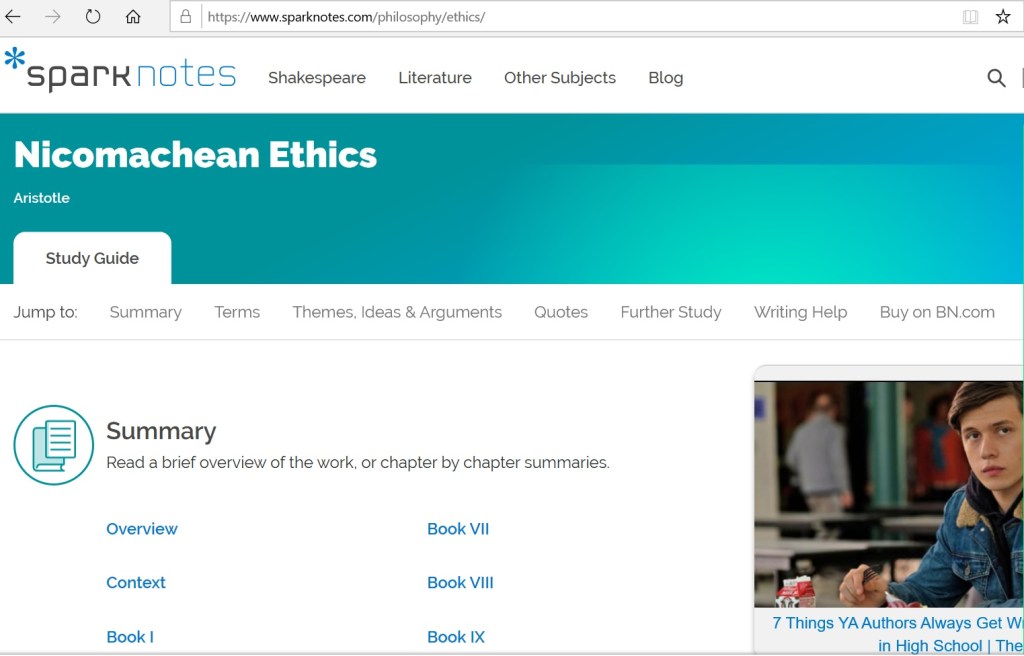
Notice the advertisement on the right hand side. One downside to SparkNotes is that it has a lot of advertisements, and tempting ones at that, so it’s best to only visit the site when you’re not in a very clicky mood. To get to this page, I just searched “nichomachean ethics” on the homepage.
Below is a little snippet of the overview SparkNotes gives on Nichomachean Ethics. The entire thing, which I didn’t have space to paste, is about a page and a half long. You can read it here.
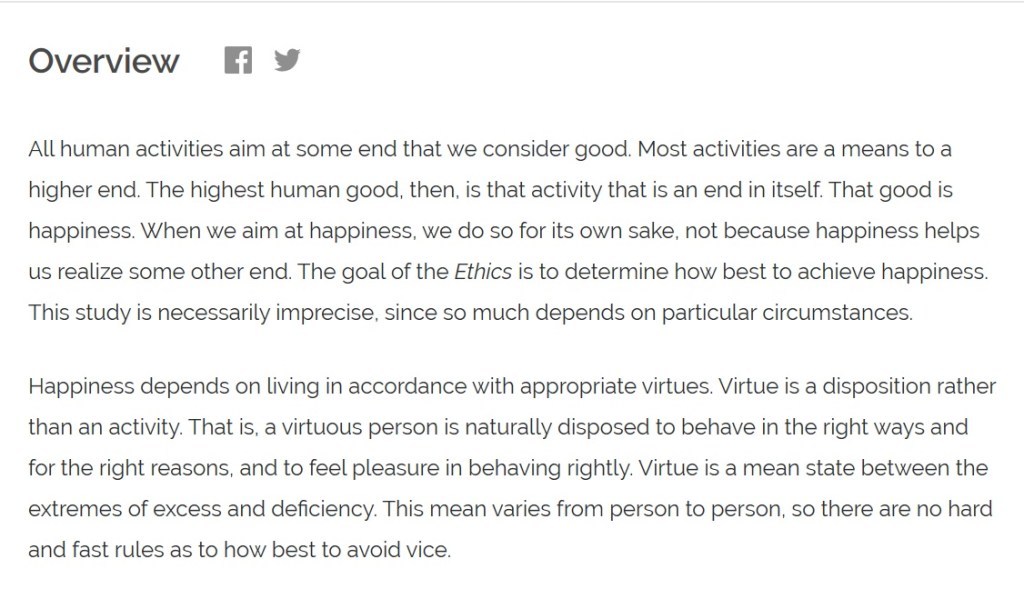
Below is a glance at the Themes page. For those of you who studied Nichomachean Ethics with Odyssey, a lot of this should sound familiar. We’ve talked about these themes in class every time I’ve seen it taught.
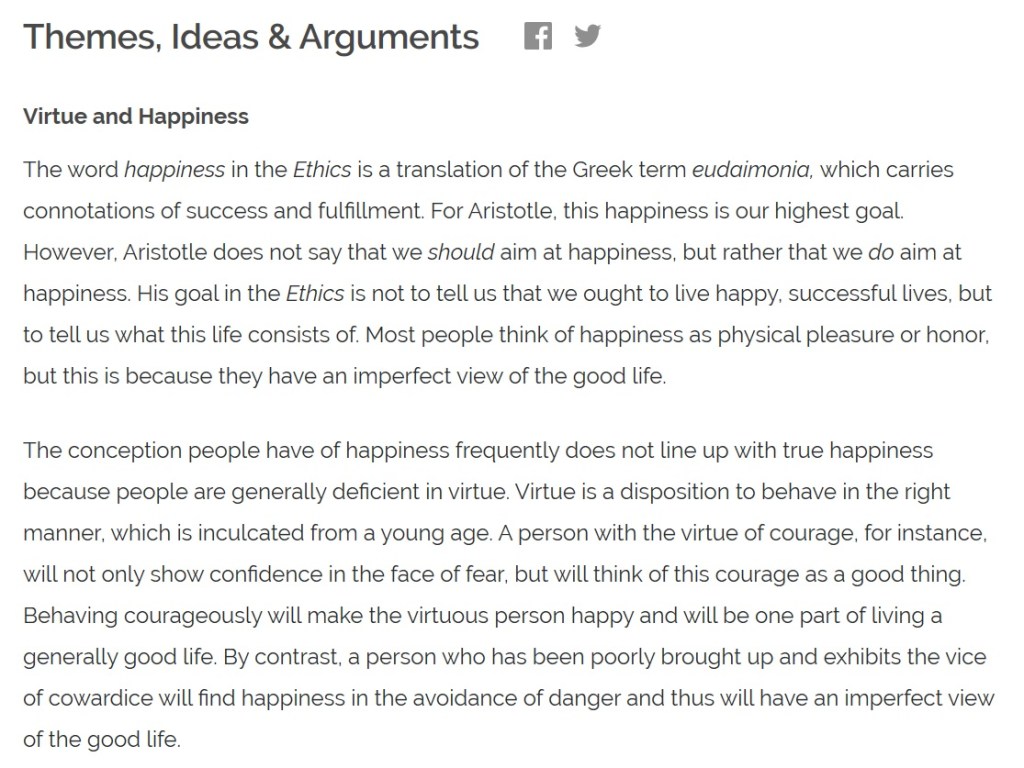
Take note that SparkNotes and similar websites are not substitutes for reading difficult texts. Rather, they are a tool that can be used to experience difficult texts on a higher level. If you have a basic understanding of a philosopher’s argument, it will be easier, once you read his or her actual words, to do things like point out contradictions, places where elaboration is needed, and much more. SparkNotes is also useful for literature and some poetry. If you had trouble understanding the short story “The Yellow Wallpaper” that was posted on this blog last week, you might check out its SparkNotes page!
For texts like Nichomachean Ethics, which were translated from Ancient Greek, and thus have very dense language, SparkNotes can be a godsend. However, don’t shy away from utilizing it to gain a basic understanding of texts that appear simple before diving into them, as well. Happy reading!
Apple Fritter Recipe from 18th Century America!
Demonstrated on YouTube by Townsends (2014)
Feeling gloomy in the winter cold? No worries! This recipe for apple fritters is over 200 years old, but it still is just as effective at warming one up. It’s easy enough that, if you like, you can try it at home (at your own risk)!
There are only six total ingredients, and some of them are optional. If you want to give it a try, you will need:
- Flour
- Ale or cider
- Chopped apples
- Currants (optional)
- Oil for frying
- Powdered sugar (optional)
The recipe is simple enough that you could add some cinnamon or other spices without hurting anything. It’s interesting to see how stable the stuff people find tasty endures across time; Americans have been frying dough for centuries, and so have many other cultures worldwide! For more information on ingredient quantities, the history of the recipe, and a demonstration, see the video below…but be warned, this channel is unbelievably addictive!
 Odyssey, Extra!