Podcast: The Weight of Words

By This American Life (2019)
Now more than ever, our words shape our reality. While most of us are isolated in our homes, we are forced to tether our job, our relationships, and our futures with only what we can express through our voices and keyboards.

The idea that words shape our reality is not one new to the post COVID-19 world; it’s actually one of the tenements of structuralism, a literary movement that believes our language shapes our reality. You may recall a post a few weeks ago which discussed the hypothesis that renaming what was originally the “Negro Renaissance” into the “Harlem Renaissance” actually changed the trajectory of the movement. If you agree this theory is true, then you are expressing structuralist thinking. A non-structuralist, meanwhile, would say that the movement changed the name, rather than the name changing the movement.

The podcast “This American Life” discusses a wide range of current events and issues affecting American people. This episode struck me as particularly relevant, given our exaggerated reliance on typed and spoken word in these trying times. How much, I wonder, are words currently shaping the reality of COVID-19?
The podcast covers three acts. The Prologue asks why God needs us to praise Him (Her? It? Them?) verbally. In Act I, a woman recalls the day the way she read changed forever. In Act II, a man discusses trying to make his daughter fall in love with hip-hop. And, finally, in Act III, one of the show’s producers discusses the words from an encounter that keep coming back to him.

You can listen to the podcast here. It is a little under an hour long, the perfect length to listen to while you knead some bread or do some laundry.
On Paragraphs & Paragraphing

By Purdue OWL (2019)


These companion pieces come from my absolute favorite writing resources on the internet: Purdue OWL. Both are one-page crash courses that cover pretty much everything you need to know about dividing paragraphs up.

I know a lot of people last semester were struggling with paragraphing, so hopefully this will help you going forward in your life as a writer, whether you apply it to personal statements, future essays, or even a blog.

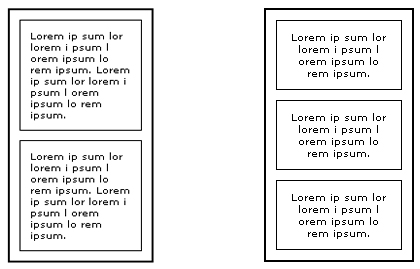
The first piece, “On Paragraphs,” explains the four elements needed for a good paragraph: “Unity, Coherence, A Topic Sentence, and Adequate Development.” The second, “Paragraphing,” reveals how you can use the visual proportions of your paper to tell which ideas might need more development.

An example of balanced paragraphs. Notice how even though the paragraphs on both pages are different lengths, both pages are evenly divided. Image courtesy of Purdue OWL (2019)

If you want, it’s worth giving these techniques a try on old cover letters, personal statements, or essays, to see where your paragraphing skills are currently at.


On Paragraphs

Paragraphing

Strategies for Overcoming Writer’s Block

By the Writer’s Workshop at University of Illinois at Urbana-Champaign

What Causes Writer’s Block                                                               

Writer’s block is often caused by conflicted feelings. We want the writing to be perfect and we want the paper done as soon as possible. We know what we know but we don’t know what our readers know. We know what we have to say but we are afraid that it won’t measure up to our expectations or to our readers’ expectations.

All of these feelings are natural and normal. Everyone finds writing a challenge. Many writers, however, compound their problems by employing weak writing strategies such as perfectionism. When these methods fail, they give up.

Strategies that Lead to Writer’s Block

Insisting on a perfect draft: Perfectionism is the surest way to writer’s block. Expecting everything to come together at once leads to paralysis and heartache. Insisting on a perfect first draft is really much slower than writing several quick drafts focused on different goals.

Waiting for inspiration: What seems like inspiration is usually the result of internalized hard work.

Effective Strategies for Overcoming Writer’s Block

Taking notes: Jot down ideas and phrases as they occur to you. Free yourself from paragraphs and sentences for the moment–use flow charts, arrows, boxes, outlines, even pictures. Right now, you are worried about getting things down before you forget them.

Freewriting: Try freewriting. Sit down for ten minutes and write down everything you can think of about your topic. The object is to write without stopping for the whole ten minutes. If you can’t think of anything to say, write “blah, blah, blah” over and over. If other things occur to you as you write, go ahead and record them, even if they are not directly related to your topic. These distractions may be part of what is keeping you blocked.

Brainstorming resembles freewriting but is more goal-directed. You start not only with a topic but also with a goal: What does this piece of writing (essay, memo, section, paragraph, etc.) need to do? Jot down ideas for a set amount of time without censoring any possibilities and without striving for perfect prose. When the “storm” has passed, you can rearrange ideas, put thoughts into complete sentences, edit, and polish.

Piecework: Sometimes, starting at the beginning induces Perfect Draft Syndrome. It may be easier to get started if you approach the task sideways. Choose a section from the middle or a point you know well and start there. Then do another section. After you’ve gained some confidence, you can work on the opening and smooth out the transitions.

What I Really Mean Is (WIRMI): When you’re stuck in a quagmire trying to find the perfect phrase, switch to What I Really Mean Is and just say it the way you think it. Once you know what you mean, it is easier to refine the phrasing.

Satisficing (satisfy + suffice): You “satisfice” when you take the first reasonable solution instead of searching endlessly for just the right word or sentence. If you’re unhappy with the choice, you can bracket it and promise yourself you’ll fix it later.

Prewriting Strategies

By the Writer’s Workshop at University of Illinois at Urbana-Champaign

Effective Prewriting Strategies

Brainstorming: Brainstorming can help you begin thinking about and narrowing down potential ideas and topics.

  • Start by thinking about ideas, topics, terms, and/or themes that you might incorporate into your writing.
  • Once you have a few key ideas, topics, terms, and/or themes, put aside any that might not be as strong or that don’t fit the assignment.
  • Group the rest of the items you listed together in whatever way makes the most sense to you and give each group a label.
  • These labels can then be developed into sentences that might turn into topic sentences or even a thesis statement.

You can go back and brainstorm at any point of the writing process. This activity can help you focus and connect your ideas.

Clustering/Mapping: Clustering or mapping is a great strategy for discovering how your ideas are connected.

  • Begin by writing your main topic or subject in the middle of a page. As you think of ideas that connect to your main topic or subject, connect those new ideas to your main idea by drawing lines.
  • Continue this process as you think of new ideas.

This process can help you come up with main ideas, identify supporting ideas, and see the connections among all of your ideas, which can help with your organization.

Freewriting: Freewriting is a great way to generate ideas without worrying about how good they are or about your writing. The goal of freewriting is to write as much as possible in a short amount of time without stopping to edit or change your writing or your ideas.

  • Start by setting a timer for 5 to 10 minutes and write about the topic/idea that you want to use in your paper without stopping.
  • Once you’ve written for 5 to 10 minutes, read over what you wrote and choose a few of the most interesting or strongest ideas.
  • Use these few strongest and most interesting ideas to freewrite again, developing even more ideas with this narrowed focus.

Repeat this process as many times as you want until you feel you have the best ideas for your paper.

Answering Key Questions: Depending on the assignment, answering the questions Who? What? When? Where? Why? How? might help you develop a lot of ideas regarding a particular topic. Potential questions to ask include:

  • Who are the participants and who is excluded?
  • What is the topic and its significance?
  • When is/was/will be the issue most important (in the past, present, or future)?
  • Where is the issue an issue?
  • Why is the issue a problem and why is it important to discuss/explore?
  • How does the issue affect participants and how can the issue be addressed?

Outlining: Outlining tends to be the most linear way to prewrite and one that most writers are familiar with. In prewriting, outlining is most helpful with developing and connecting the structure and argument of your assignment. Often, in identifying the larger elements of an assignment (the thesis, main point of a paragraph, etc.) and putting them into a rough outline, it becomes easier to fill in what goes under each outlined section.

  • Start your outline (whether in a digital document or handwritten on paper) by laying out your sections and subsections. A good rule of thumb is to start with a bullet/section per paragraph, and then expand from there.
  • Filling in a thesis for argumentative/essay assignments (even if it’s rough or really only a placeholder) can help you better figure out the structure of your assignment. Then, for each paragraph, think about the main point of that paragraph and how it connects to your thesis/introduction. You can keep working down from there if you want, all the way to writing the ideas and even sentences you’ll want to include in that paragraph.
  • Though outlines can be a little less flexible than other kinds of prewriting, don’t be too worried about everything making total and complete sense when you write it; like other kinds of prewriting, outlining is about getting stuff down so you can get to work writing, so it’s okay to just use it to jot down notes and ideas as you go.
  • Outlines can be really useful when starting an assignment, but it’s also good to remember that crafting an outline at any stage in the process is likely to help you better recognize and organize your structure. It’s never too late for an outline!