“In this passionate talk, Theaster Gates, a potter by training and a social activist by calling, describes his efforts to build a “miniature Versailles” in Chicago, and he shares his fervent belief that culture can be a catalyst for social transformation in any city, anywhere.” -TED YouTube
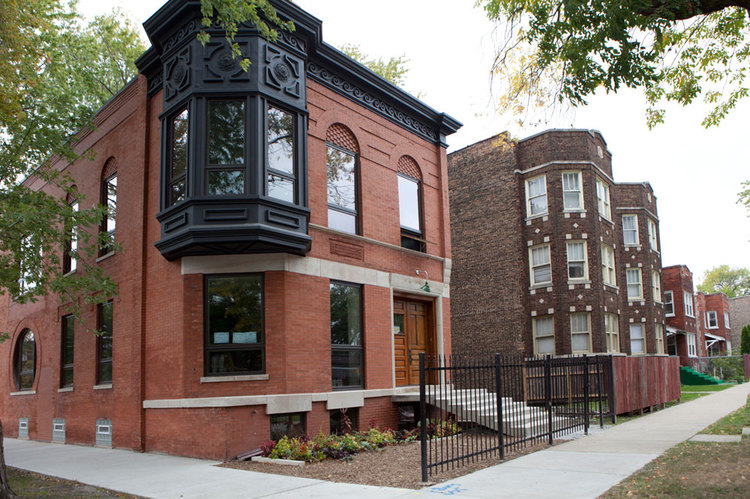
Pictured to the left is the abandoned residence Gates transformed into the black cinema house.
“The Couple in the Cage” was a piece of performance art by Coco Fusco and Guillermo Gómez-Peña that took place from 1992-1993, 500 years after Christopher Columbus arrived in the Americas. It debuted at the Field Museum in Chicago, Illinois, and toured from city to city across the world while it was active.
During each performance, Fusco and Gómez-Peña donned the traditional clothing of the “Guatinaui” people, a tribe previously undiscovered by Western society. In the cage, they also performed traditional Guatinaui tasks such as sewing voodoo dolls, watching television, and dancing. The catch? Neither the Guatinaui people nor the island they were allegedly from existed.
The performance was supposed to be a satire of the human zoos (featuring indigenous people) created by Christopher Columbus and practiced for centuries thereafter. However, it didn’t go entirely as planned; many of the audience members actually believed the Guatinaui people were real, and readily stepped into the shoes of the white colonist examining the indigenous person as an artifact.
This video documents the entire tour, and is a piece of art in itself. It’s long, but it’s extremely powerful. Fusco and Gómez-Peña’s art is significant not only in the statement it makes against colonialism and racism, but also because it reimagines what art can be. In this piece, the audience is as much as part of the art piece as the performance artists themselves.
If you do decide to watch the video, be aware that it contains both racism and nudity; for five dollars, museum visitors were allowed to see the “male Guatinaui’s” genitals. Consider, as you watch, what medium of art this would be considered, as well as its shape, form, color, etc. Why might this performance say about gender? Sexuality?
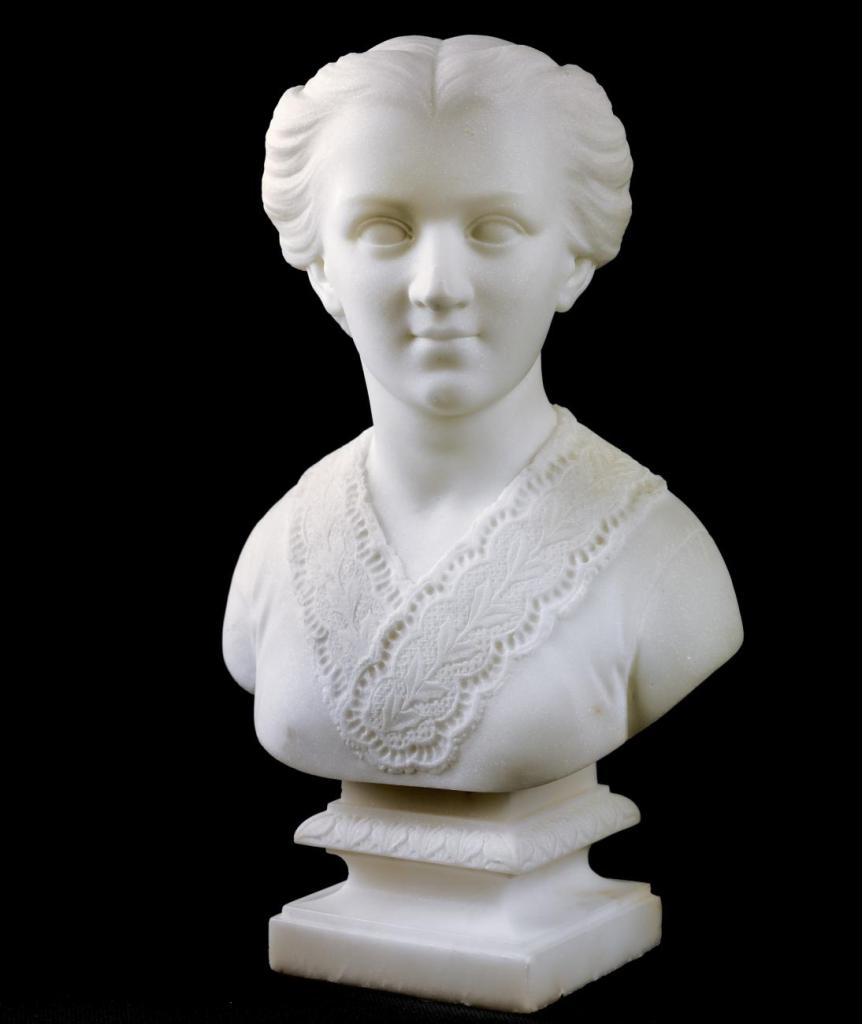
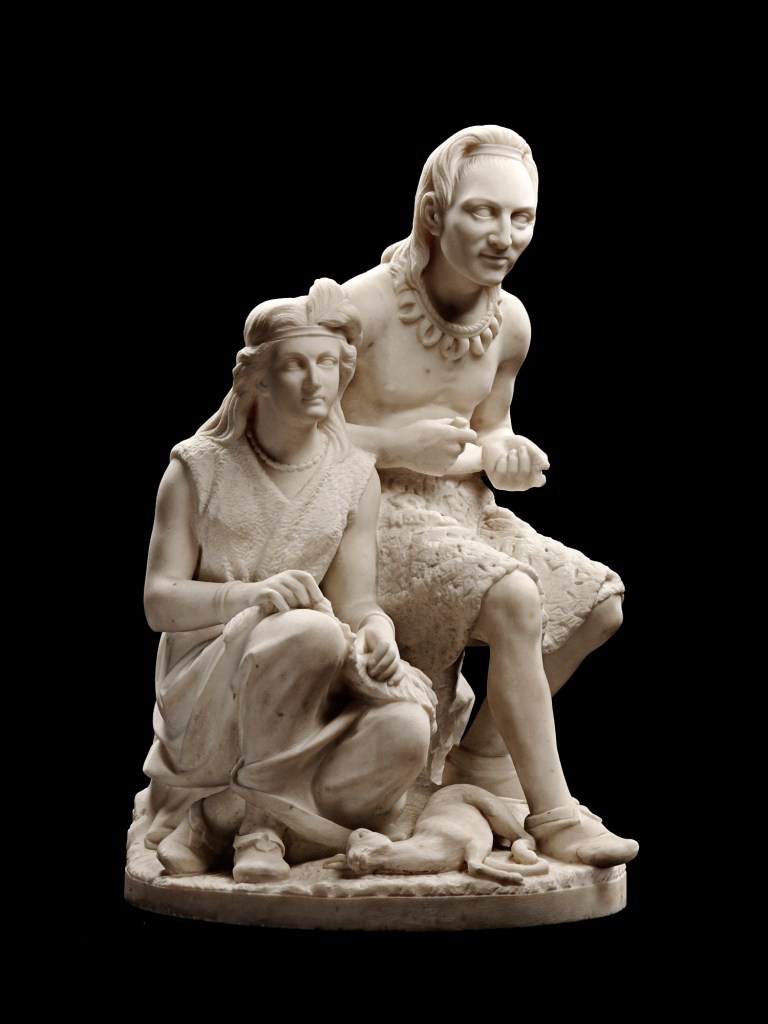
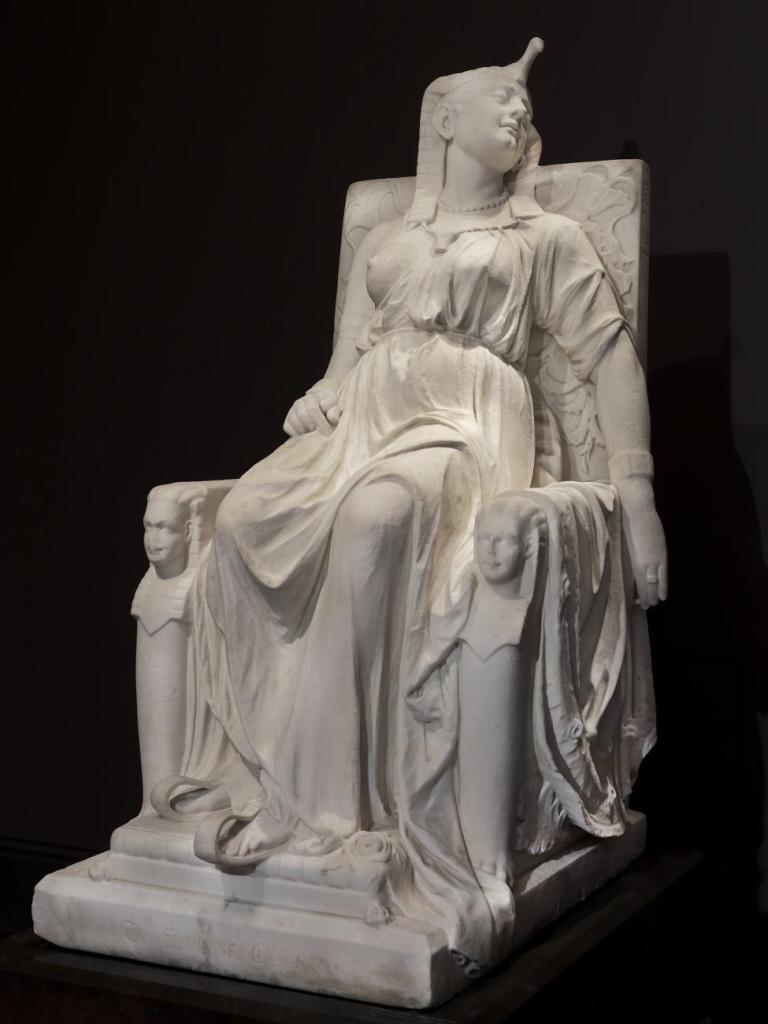
Mary Edmonia Lewis is known today as the first professional African-American sculptor. Though racism, false accusations of theft and poisoning, and poverty threatened to keep her out of the art world, her marble sculptures earned her worldwide renown. Few of her pieces survive today, but her portfolio is extensive; her sculptures had Greco-Roman influences, but she was known primarily for expressing her dual Native-American and African-American heritage. You can read her full biography here.
Edmonia Lewis Anna Quincy Waterston, 1866
Edmonia Lewis Old ArrowMaker, 1872
Edmonia Lewis The Death of Cleopatra, 1876
A few of Edmonia Lewis’s sculptures.
If you’re more of a words person than a visual person, or if you just want to experience more of Edmonia Lewis’s lasting impact on art and culture, you might consider reading these poems by Tyehimba Jess. If you’re a current Odyssey student at UIUC, keep that name in mind, as you may be hearing about a relevant event soon!
The poems can be read at this link, and are titled “Alabaster Hands” and “Indian Combat.” Both are inspired by Lewis’s work.
 Odyssey, Extra!