Blog Feed

Short Story: “The Yellow Wallpaper”

By Charlotte Perkins Gilman (1892)

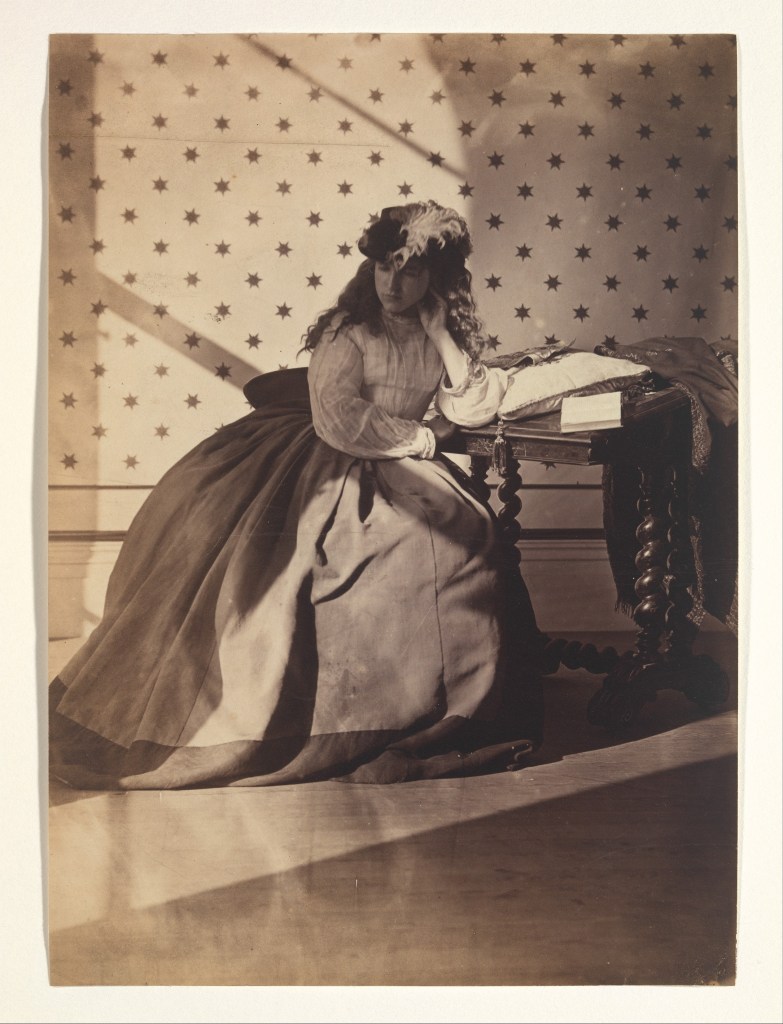
Clementina Hawarden, "Photographic Study" (1860s)

In the mood to read something creepy? If so, Charlotte Perkins Gilman’s “The Yellow Wallpaper” is the short story for you. A gothic tale and a significant early piece of feminist fiction, “The Yellow Wallpaper” is about a depressed woman forbidden from writing or leaving the house by her husband, a doctor. After several weeks of this, she begins to notice (or hallucinate?) women living in the walls around her.

Have you read the story, but still feel like you don’t really “get” it? Try giving its page on SparkNotes a readthrough. They explain the themes of the story, the symbolism, and more. Sometimes, it can even be beneficial to read the SparkNotes before the actual story.


Gilman, Charlotte Perkins. The Yellow Wallpaper. 2nd version, 1892, Project Gutenberg, http://www.gutenberg.org/files/1952/1952-h/1952-h.htm.

Poem: “Toxic Masculinity”

By Kennedy Engasser & Scorpio (2019)

Slam poetry is a form of poetry spoken aloud, often in competition with other poets. This performance is from grand finals at the 2019 Brave New Voices International Youth Poetry Festival.

Brave New Voices brings the world’s leading young poets together to slam, dream, and push the edge of artistic expression, creating a global movement.

Mining Literature for Deeper Meaning

By TED-Ed (2013)

Understanding the deeper meanings present in literature can both give you more to talk about in class, make the text more fun to read, and speed up the paper-writing process. This four-minute video summarizes how to approach a literary text or poem in order to understand its deeper meaning, and gives side by side examples of surface-level and deeper analysis, so you’ll have an idea of what each looks like.

Amy E. Harter offers a few tips on how to read and write more critically and thoughtfully.
Lesson by Amy E. Harter, animation by The Leading Sheep Studios.

On Paragraphs & Paragraphing

By Purdue OWL (2019)


These companion pieces come from my absolute favorite writing resources on the internet: Purdue OWL. Both are one-page crash courses that cover pretty much everything you need to know about dividing paragraphs up.

I know a lot of people last semester were struggling with paragraphing, so hopefully this will help you going forward in your life as a writer, whether you apply it to personal statements, future essays, or even a blog.

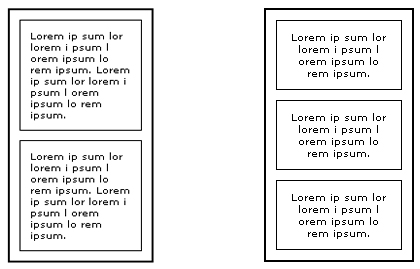
The first piece, “On Paragraphs,” explains the four elements needed for a good paragraph: “Unity, Coherence, A Topic Sentence, and Adequate Development.” The second, “Paragraphing,” reveals how you can use the visual proportions of your paper to tell which ideas might need more development.

An example of balanced paragraphs. Notice how even though the paragraphs on both pages are different lengths, both pages are evenly divided. Image courtesy of Purdue OWL (2019)

If you want, it’s worth giving these techniques a try on old cover letters, personal statements, or essays, to see where your paragraphing skills are currently at.


On Paragraphs

Paragraphing

Strategies for Overcoming Writer’s Block

By the Writer’s Workshop at University of Illinois at Urbana-Champaign

What Causes Writer’s Block                                                               

Writer’s block is often caused by conflicted feelings. We want the writing to be perfect and we want the paper done as soon as possible. We know what we know but we don’t know what our readers know. We know what we have to say but we are afraid that it won’t measure up to our expectations or to our readers’ expectations.

All of these feelings are natural and normal. Everyone finds writing a challenge. Many writers, however, compound their problems by employing weak writing strategies such as perfectionism. When these methods fail, they give up.

Strategies that Lead to Writer’s Block

Insisting on a perfect draft: Perfectionism is the surest way to writer’s block. Expecting everything to come together at once leads to paralysis and heartache. Insisting on a perfect first draft is really much slower than writing several quick drafts focused on different goals.

Waiting for inspiration: What seems like inspiration is usually the result of internalized hard work.

Effective Strategies for Overcoming Writer’s Block

Taking notes: Jot down ideas and phrases as they occur to you. Free yourself from paragraphs and sentences for the moment–use flow charts, arrows, boxes, outlines, even pictures. Right now, you are worried about getting things down before you forget them.

Freewriting: Try freewriting. Sit down for ten minutes and write down everything you can think of about your topic. The object is to write without stopping for the whole ten minutes. If you can’t think of anything to say, write “blah, blah, blah” over and over. If other things occur to you as you write, go ahead and record them, even if they are not directly related to your topic. These distractions may be part of what is keeping you blocked.

Brainstorming resembles freewriting but is more goal-directed. You start not only with a topic but also with a goal: What does this piece of writing (essay, memo, section, paragraph, etc.) need to do? Jot down ideas for a set amount of time without censoring any possibilities and without striving for perfect prose. When the “storm” has passed, you can rearrange ideas, put thoughts into complete sentences, edit, and polish.

Piecework: Sometimes, starting at the beginning induces Perfect Draft Syndrome. It may be easier to get started if you approach the task sideways. Choose a section from the middle or a point you know well and start there. Then do another section. After you’ve gained some confidence, you can work on the opening and smooth out the transitions.

What I Really Mean Is (WIRMI): When you’re stuck in a quagmire trying to find the perfect phrase, switch to What I Really Mean Is and just say it the way you think it. Once you know what you mean, it is easier to refine the phrasing.

Satisficing (satisfy + suffice): You “satisfice” when you take the first reasonable solution instead of searching endlessly for just the right word or sentence. If you’re unhappy with the choice, you can bracket it and promise yourself you’ll fix it later.